

GSK Call for Proposal: Africa Open Lab
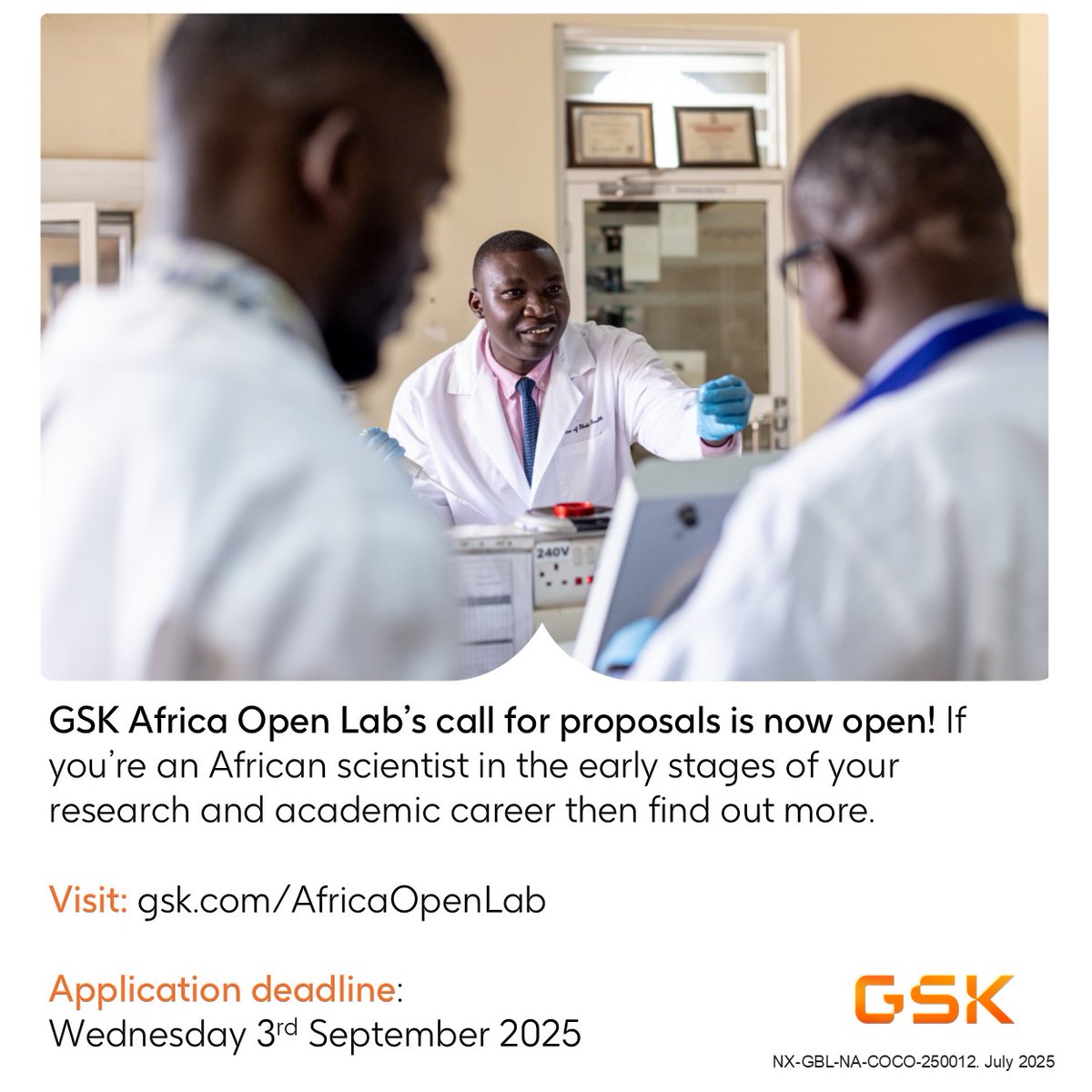
The Africa Open Lab is inviting applications from African scientists at an early stage of their career with an interest in conducting research in infectious diseases. We strive to enable awardees to develop their research careers through offering funding for a research project and mentoring while they conduct their innovative research projects.
Africa Open Lab call is for proposals of relevance to the understanding of infectious disease epidemiology, aetiology, prevention, and control; proposals addressing significant gaps in knowledge as well as mechanisms to improve access and use of medicines and vaccines for infectious diseases in Africa.
Proposals must demonstrate the specific health needs their research will address and how they will engage with specific stakeholders to bring about change in health policy and/or practice.
The research project may consist of population-based or clinical studies, laboratory-based analysis of field or clinical samples, but projects focused solely on studies in vitro or research using animal models will not be considered.
- Malaria
- Tuberculosis (TB) or drug-resistant tuberculosis
- Drug resistant bacterial infections
- Enteric infections
Malaria (may include but not limited to research addressing):
- Epidemiology (characterisation) in children hospitalised due to malarial anaemia and severe malaria, with focus on management of those discharged with anaemia (e.g. description of preventive malaria treatment and treatment outcome)
- Treatment of malaria with artemisinin-based combination therapy (ACTs):
- Level of compliance with ACTs
- Risk factors that lower compliance and their link to treatment outcomes in a real-world setting
- Resistance to ACT
- Seasonal malaria chemoprevention (SMC) and perennial prevention of malaria
- Level of resistance to drug used in SMC
- Cost of delivering SMC and cost of care of a malaria case and the impact to caregivers and the affected individuals
- Risk factors that lower compliance (inc. different populations) and their link to treatment outcomes in a real-world setting
- Description of standard of care and treatment seeking behaviours and dynamics
- Diagnosis of malaria. Detection of low level parasitaemia in asymptomatic carriers. Detection of mixed infections; prevalence of non-falciparum malaria
- Treatment for P. vivax/ovale radical cure. Evidence of chloroquine resistant strains. Risk factors for effective treatment (compliance, G6PDH deficiency)
- Effectiveness of vaccines
- Approaches to increase the uptake of malaria vaccine and other interventions
- Biology of vectors
Click here for further information.
Concept submission deadline, 3rd of September 2025 at 17:00 GMT.