
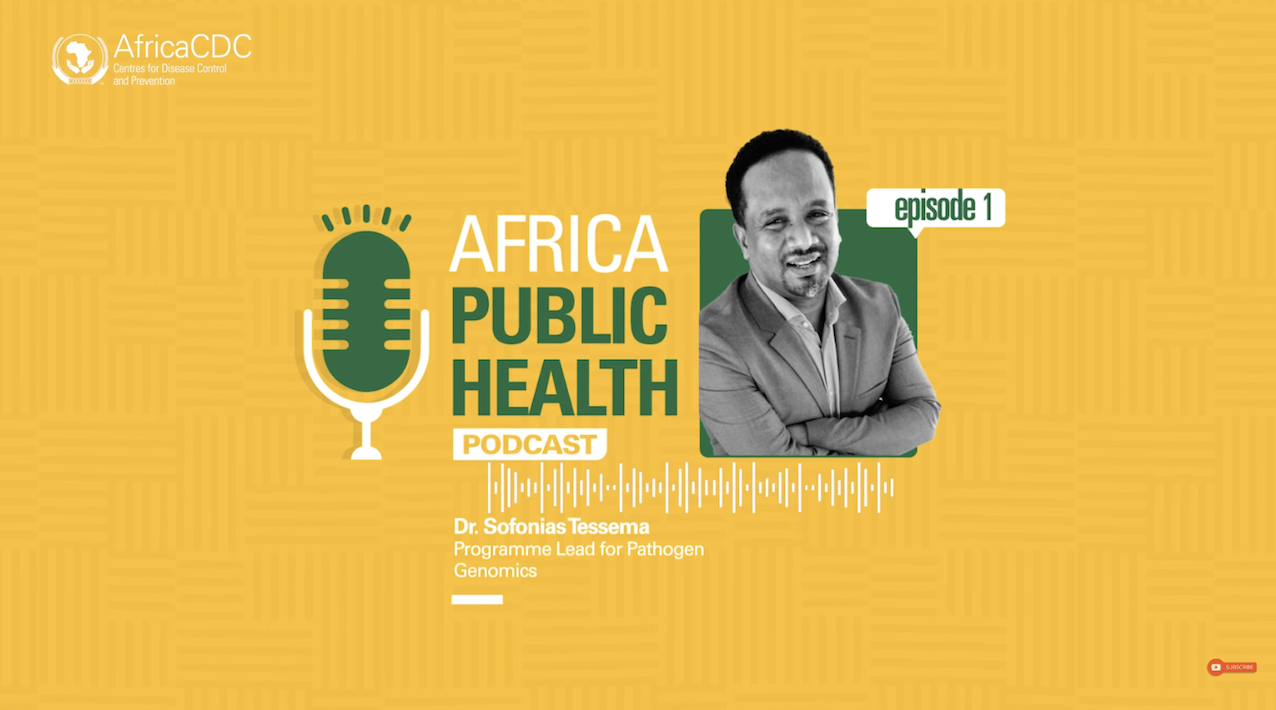
The Power of Genomics in Disease Control with Dr. Sofonias Tessema
Published: 20/03/2025
Podcast Overview
How can genomics and pathogen surveillance transform Africa’s fight against infectious diseases? In this premiere episode, host Andisiwe Michelle May sits down with Dr. Sofonias Tessema, the Program Lead for Pathogen Genomics at Africa CDC, to discuss how genomic technology is transforming outbreak detection and response across the continent.
From tracking infectious disease outbreaks to scaling genomic sequencing capabilities in 40+ African nations, Dr. Tessema shares insights on malaria, Ebola, cholera, antimicrobial resistance (AMR), and AI-driven innovations shaping the future of disease surveillance.
Podcast Summary
In the inaugural episode of the Africa CDC Public Health Podcast, Dr. Sofonias Tessema, Program Lead for Pathogen Genomics at Africa CDC, discusses the transformative potential of genomics in disease surveillance, outbreak response, and health security in Africa. The study of the genetic material of pathogens has proven to be a game-changing tool in tracking infectious disease outbreaks such as COVID-19, Ebola, malaria, and cholera. Africa CDC has spearheaded the expansion of genomic sequencing capacity across more than 40 countries, enabling more timely and localized responses to public health threats.
Dr. Tessema explains how pathogen genomics helps detect variants, understand transmission dynamics, and inform targeted interventions. However, he also acknowledges the complexities of implementing these technologies at scale in Africa, including technical, infrastructural, and workforce limitations. The episode emphasizes the importance of political commitment, investment in human capital, and sustainable data systems to fully realize the benefits of genomics.
Looking ahead, Africa CDC aims to integrate genomics more deeply into national public health systems, build regional reference labs, promote data sharing, and train a new generation of African genomic scientists. The discussion reflects Africa CDC’s broader vision of fostering an African-led, innovative public health ecosystem rooted in science, trust, and collaboration.
Importance of genomics
- Enhances early detection and response to emerging and re-emerging infectious diseases.
- Tracks pathogen evolution, including drug resistance and mutation patterns.
- Informs data-driven decisions for outbreak containment and public health policy.
- Empowers countries with localized insights for targeted intervention strategies.
Challenges discussed
- Limited genomic infrastructure and equipment in many countries.
- Shortage of skilled bioinformaticians and trained lab personnel.
- Data sharing barriers, ethical considerations, and weak governance frameworks.
- Financial and policy-level gaps hindering scalability and sustainability.
Next steps
- Expand training and mentorship programs for African scientists.
- Strengthen regional genomic centers and cross-border collaboration.
- Promote standardized data sharing protocols and ethical frameworks.
- Advocate for increased political commitment and domestic financing.
*This summary was prepared by Ambadiang Mae Marilene M., an alumna of the MESA Correspondents Program.
Published: 20/03/2025
THEMES: Genetics and Genomics | Surveillance
Related Resources