
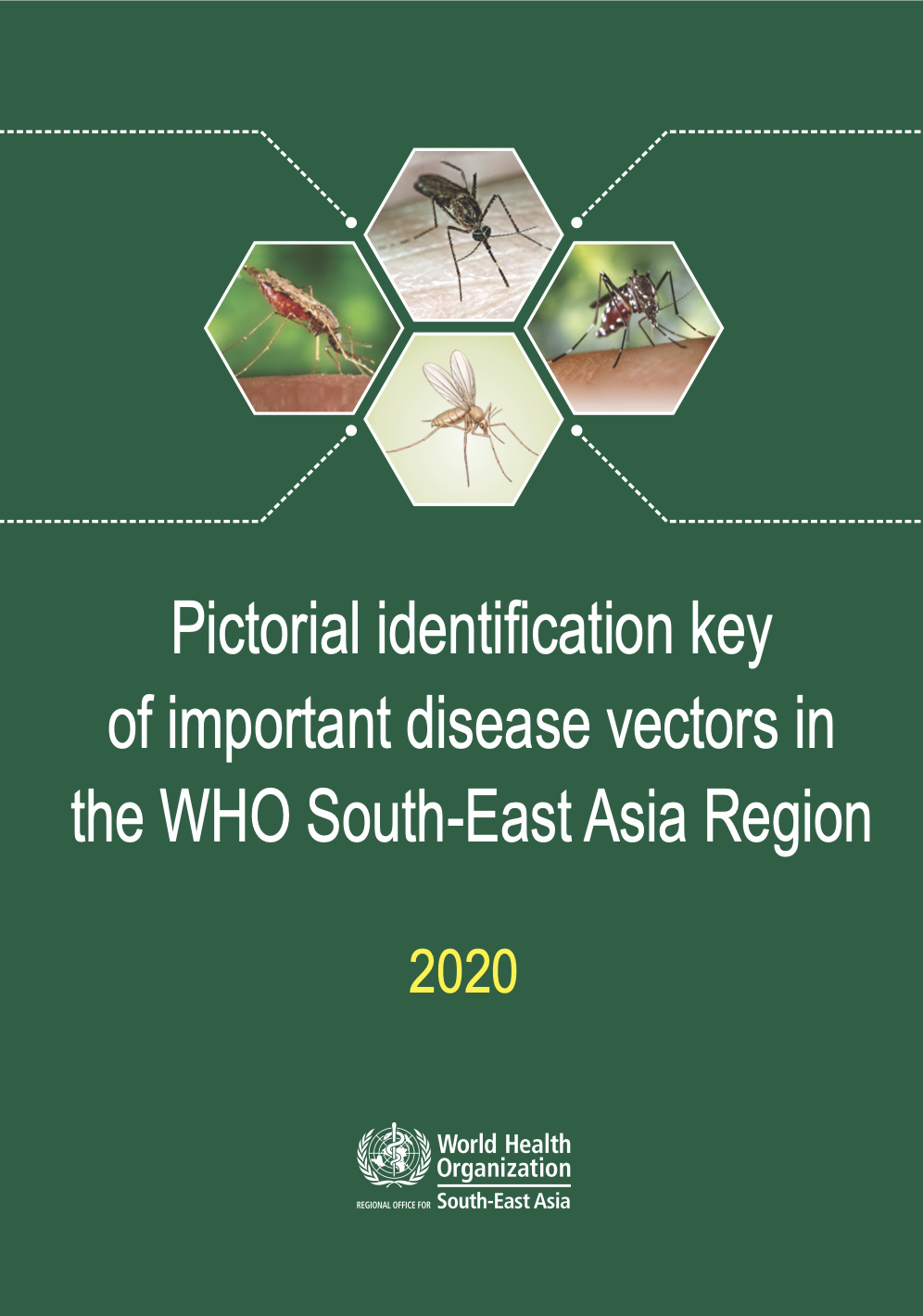
Pictorial identification key of important disease vectors in the WHO South-East Asia Region
Source(s):
Published: 01/07/2020
The purpose of this manual and toolkit is to provide a practical, user-friendly guide for the identification of important disease vectors in the WHO South-East Asia Region. Vector-borne diseases remain a major public health challenge in the region, and effective prevention and control depend heavily on accurate identification of vectors.
This resource has been developed to:
- Support public health workers, entomologists, researchers, teachers, and students in correctly identifying vector species of medical importance.
- Simplify complex taxonomic information into clear pictorial keys and illustrations that facilitate rapid and reliable identification.
- Provide accessible information on the distribution, morphological characteristics, and bionomics of 76 vector species, including Anopheles, Aedes, Culex, Mansonia mosquitoes, and Phlebotomus sandflies.
- Strengthen epidemiological understanding of vector-borne diseases by improving field and laboratory identification capacity.
- Serve as a toolkit to enhance disease surveillance, guide vector control interventions, and build capacity among Member States to respond effectively to vector-borne disease threats.
By offering standardized and region-specific identification tools, this manual aims to improve knowledge, harmonize practices, and ultimately contribute to reducing the burden of malaria, dengue, chikungunya, Zika, Japanese encephalitis, lymphatic filariasis, and leishmaniasis in South-East Asia.
Published: 01/07/2020
Language
English
THEMES: Epidemiology | Surveillance
Related Resources