
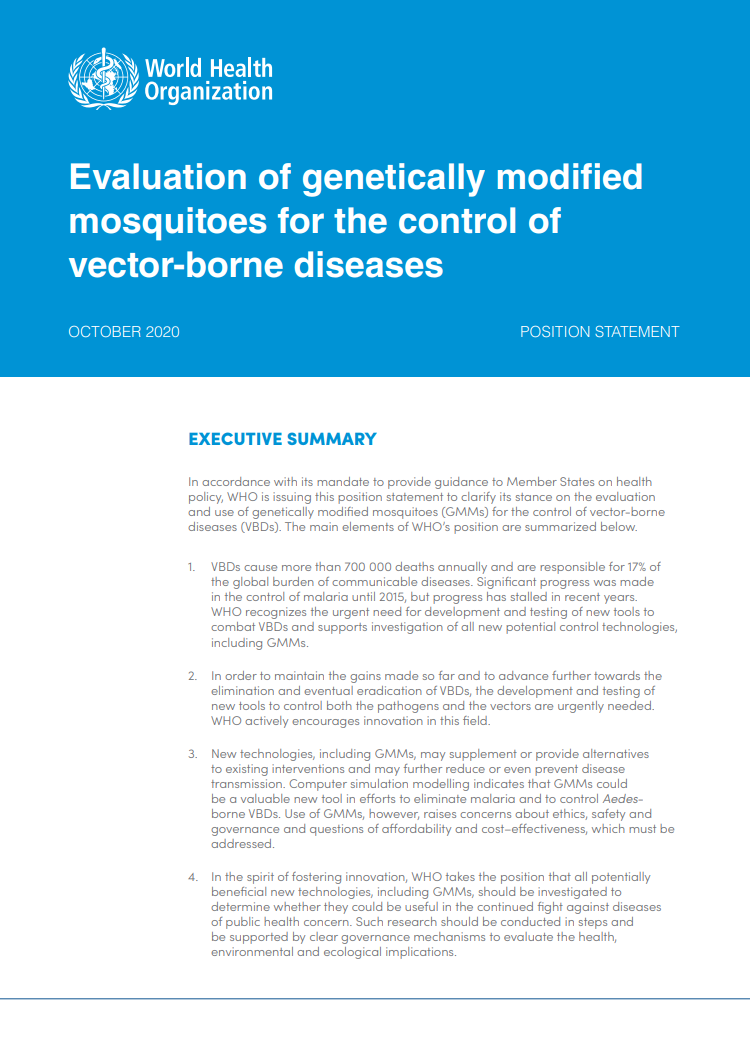
Evaluation of genetically modified mosquitoes for the control of vector-borne diseases
Published: 13/10/2020
This WHO statement was prepared in response to enquiries from Member States and their implementing partners about the Organization’s position on both research on and deployment of GMMs to reduce or prevent transmission of VBDs. Significant progress has been made in genetic modification of mosquito vectors to introduce physiological changes designed to either suppress local mosquito populations or to reduce their susceptibility to infection and their ability to transmit disease-causing pathogens. Scientists are now beginning to conduct research in endemic countries to explore the feasibility of deploying GMM approaches. These advances have led to an often-polarized debate on the benefits and risks of GMMs, in which the purpose of evaluating this new technology sometimes appears to be forgotten. In accordance with its mandate to provide guidance to Member States on matters concerning public health, WHO has therefore framed its position in this context and provides its views on the evaluation of GMMs as a potential tool in the fight against VBDs. This position statement is designed to support decision-making in Member States, although further support from WHO and other partners may be necessary in some countries, depending on developments in GMMs.
Published: 13/10/2020
THEMES: Genetics and Genomics | Vector Control
Related Resources