
Last Updated: 16/06/2025
Mathematical modeling to inform urban malaria microstratification
Objectives
To generate data and evidence for appropriate intervention mixes towards efficient malaria elimination efforts in urban locations in Nigeria.
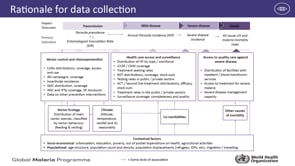
Nigeria accounts for the greatest number of malaria cases and deaths and is also urbanizing at a rapid pace. The 2022 World Malaria Report revealed that, 27% of all global malaria cases and 31% of all global malaria deaths in 2021 occurred in Nigeria. In the 2020 World Cities Report produced by UN Habitat, Nigeria is one of three countries projected to account for 35% of the total increase in the global urban population from 2018 to 2050. Rapid growth in the urban population without attendant expansion of city infrastructure to accommodate new residents may trigger development and expansion of informal settlements and slums with favorable conditions for malaria vector breeding. Consequently, cities, which typically have low malaria prevalence due to improved infrastructure and fewer avenues for mosquito biting will start to see higher levels of malaria transmission. We are conducting field and modeling research studies to understand the burden of malaria and its determinants in Kano and Ibadan, two major Nigerian cities.
Dec 2021 — Dec 2025
$1.56M
Related Resources