
Last Updated: 01/09/2025
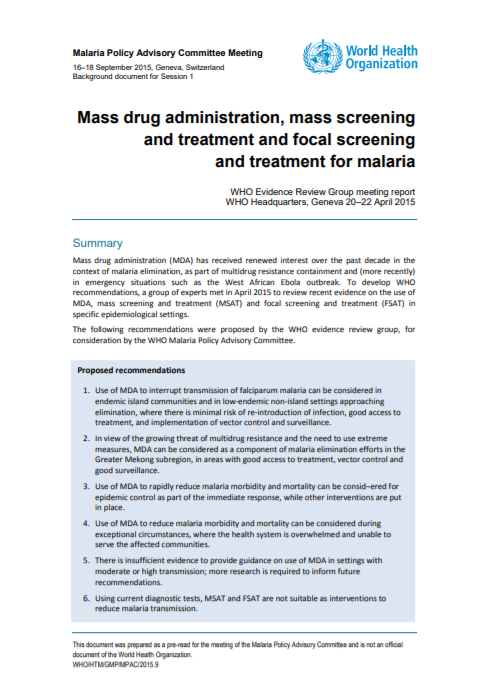
Mass Screen and Treat (MSAT) and Focal Drug Administration Strategies in Zanzibar
Objectives
- The first study of this grant aimed to evaluate the impact of MSAT, using P. falciparum–specific RDT and artesunate-amodiaquine (ASAQ), on malaria incidence in Zanzibar. To determine the overall prevalence of malarial parasite infection, including low-density and non-falciparum infections not detected by the RDT, blood samples collected on filter paper underwent molecular analyses.
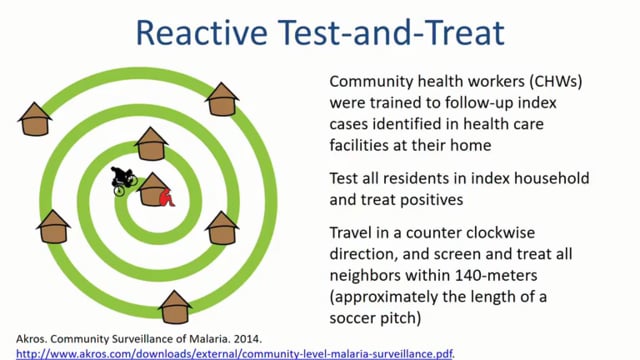
- The second study of this grant assessed the spatial distribution of low-density P. falciparum infections in relation to RDT-detected infections. The researchers also studied the implications this distribution may have for different FSAT and FDA approaches and assessed the usefulness of serological analyses as a screening tool to detect and identify individuals or households at risk of exposure to infection.
In 2012, an MSAT campaign using P. falciparum–specific RDT took place in a malaria hot-spot area in Zanzibar. A postcampaign molecular screening of the same survey samples identified a large proportion of low-density P. falciparum infections that were not detected by RDT. In a second study, the researchers assessed the spatial distribution of these PCR-determined infections in relation to the RDT-detected infections.
J Infect Dis 2015; Mass Screening and Treatment on the Basis of Results of a Plasmodium falciparum-Specific Rapid Diagnostic Test Did Not Reduce Malaria Incidence in ZanzibarClin Infect Dis. 2017; Spatial Distribution of Falciparum Malaria Infections in Zanzibar: Implications for Focal Drug Administration Strategies Targeting Asymptomatic Parasite Carriers
Jan 2012 — Dec 2012
Related Resources