
Correspondents
Busari Lateef Oluwatoyin is a PhD Student of parasitology and vector biology at the Osun State University (Nigeria).
Working as a MESA Correspondent is splendid as it avails me the opportunity of learning from peers and experts in the field of malaria and networking. I am indeed elated and grateful to the MESA team for this great opportunity.
Carlos A. Fernández Miñope is a PhD student in Medical Sciences at the University of Antwerp (Belgium) and a malaria researcher trained in data analysis and bioinformatics for the molecular epidemiology of tropical infectious agents. He has a dedicated interest in academic creative writing and a master’s degree in molecular biology from the Universidad Peruana Cayetano Heredia (Peru). He also serves currently as a junior professor at the Universidad Científica del Sur (Peru).
Being a MESA correspondent at an event as important as the ASTMH annual meeting is one of the best opportunities to learn and connect with the scientists and global health professionals who are leading the way towards the elimination of malaria.
Caroline Kiuru (Barcelona Insitute for Global health – Spain and Centro de Investigação em Saúde de Manhiça – Mozambique) is an Entomologist currently undertaking post-doctoral training in the BOHEMIA project, a clinical trial evaluating the use of ivermectin for malaria control. Her research interests are in new vector control tools.
Through the MESA reports I had the opportunity to be involved in the dissemination of the current research findings in vector-borne diseases presented at the PAMCA annual conference.
Christine Markwalter (Duke Global Health Institute, Durham NC, USA) works on translational studies of malaria molecular epidemiology and has training in malaria diagnostics development and bioanalytical chemistry.
I am thankful for the opportunity to contribute to the MESA reports for the first Women in Malaria conference, an inclusive event highlighting the contributions of female scientists to the field.
Deborah Neumbe is pursuing her Master of Science in Bioinformatics at Makerere University in Kampala, Uganda. Her area of expertise lies in the analysis of malaria vector genomics, specifically focusing on pyrethroid target site resistance.
Being a MESA Correspondent at the Genomic Epidemiology of Malaria Conference presents an opportunity for me to contribute to disseminating ongoing malaria research and connect with international malaria experts. I look forward to this exciting experience.
Diane Leslie Nkahe is a final year Ph.D. student, studying Parasitology and Ecology at the University of Yaoundé I. She is also an intern in medical entomology at the Malaria Research Center of Yaoundé based at OCEAC.
Offering help at this point, is a way of helping MESA in sharing knowledge. And I think it will also allow me to keep in touch with MESA Malaria. I thought that since I am attending the conference, I can offer my help during my free time as I did last year.

Djelissa Sofia Fernandes Gomes de Pina is a Master’s student in Infectious and Tropical Diseases at Jean Piaget University of Cabo Verde and Laboratory Technician in the Genomic Sequencing and Bioinformatics Unit at the National Institute of Public Health, Cape Verde.
Malaria remains a major global health challenge, and understanding it requires interdisciplinary insights. With a background in molecular biology and genomic sequencing, I’m particularly interested in how genetic variability affects disease dynamics. The MESA correspondents program offers a valuable opportunity to contribute to the communication of scientific findings, engage with experts, and enhance my skills in making complex research accessible to a broader audience.
Djiby Sow is a Researcher specializing in parasitology and molecular biology at the International Research Training Center on Genomics and Health Surveillance (CIGASS), Cheikh Anta Diop University, Dakar, Senegal. He has actively contributed to malaria research and diagnostics through both laboratory and field-based studies. His work includes coordinating molecular activities for the PARMA/PMI project and contributing to studies on Plasmodium falciparum drug resistance and gene deletion surveillance.
Volunteering as a MESA Correspondent would allow me to leverage my experience in scientific communication, while improving my ability to translate complex findings for a wider audience. I am particularly motivated by the opportunity to broaden access to cutting-edge malaria research and to engage with leading scientists and young researchers across Africa and beyond.
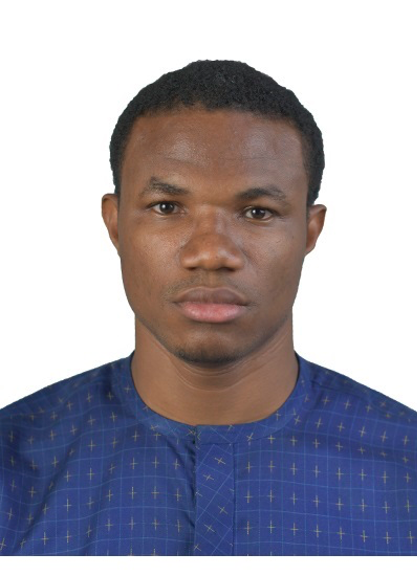
Vincent Duru is a Berlin Universities Alliance Doctoral scholar (BUA Mel-BER Network), currently pursuing his joint Ph.D. scholarship at both the Freie Universität Berlin and the University of Melbourne. His research focuses on the tripartite interaction between diseases vectors, their microbiota, and the pathogens they transmit. With a passion for addressing vector-borne diseases in Africa, Vincent has actively participated in collaborative projects. Notably, he contributed to non-falciparum malaria research in West Africa with the Malaria Population Biology group at the Medical Research Council unit, The Gambia, London School of Hygiene and Tropical Medicine. Vincent combines his research pursuits with a keen interest in science communication, Biomedical data analysis and project management.
Attending the Genomic Epidemiology of Malaria conference as a MESA correspondent will provide a great opportunity to stay abreast of genomics studies of vector-pathogen interactions. The advanced state of malaria vector genomics research, compared to other vector studies, will offer valuable insights and innovative approaches to enhance my understanding and methodologies in tick-borne disease research while fostering networking opportunities.