
ILSI: Gene Drive for Malaria Control
Published: 23/01/2018
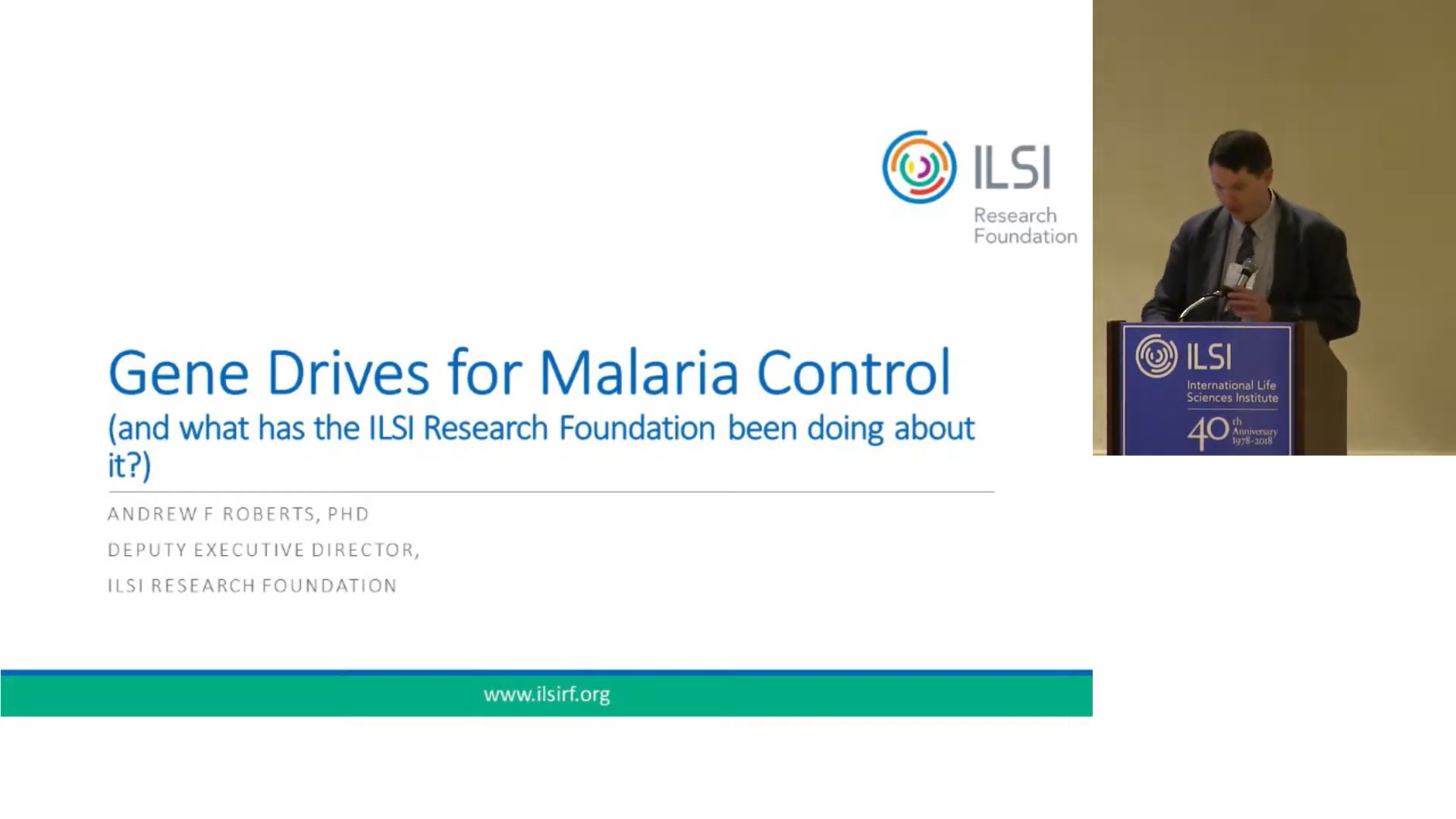
This talk was given at the International Life Sciences Institute (ILSI) North America Annual Meeting 2018 by Andrew Roberts who discusses the application of gene drive technologies for malaria vector control, focusing on their scientific basis, potential benefits, and associated ecological and regulatory considerations. He outlines two gene drive strategies for malaria control: population suppression (reducing mosquito numbers) and population replacement (reducing vector competence). Emphasis is placed on the need for rigorous environmental risk assessment frameworks that consider ecological, human health, and water quality impacts. Roberts also highlights the importance of stakeholder engagement, governance structures, and transparency throughout the development and deployment processes. The talk provides a foundational overview for policymakers, researchers, and stakeholders interested in gene drive technologies for vector-borne disease control.
This video was published by International Life Sciences Institute (ILSI)
Published: 23/01/2018
THEMES: Genetics and Genomics | Vector Control
Related Resources