
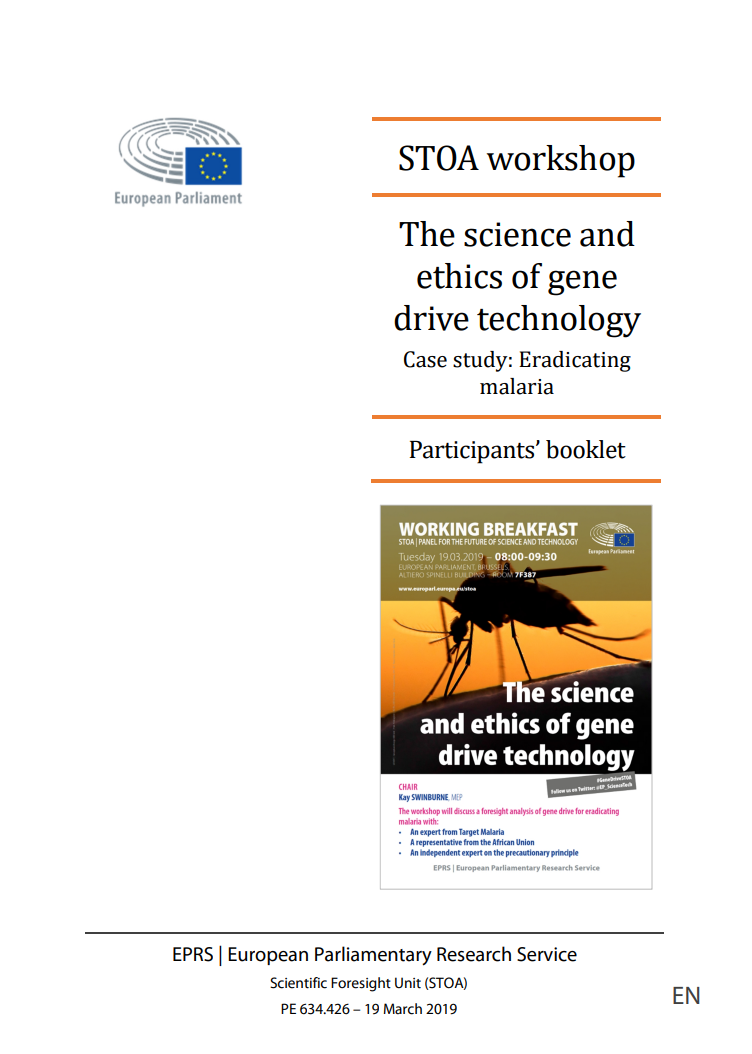
STOA Workshop | The science and ethics of gene drive technology – Case study: Eradicating malaria
Published: 19/03/2019
Malaria is a terrible burden on humanity, causing suffering for approximately 200 million people per year globally and the death of more than 400 000, more than half of which are children aged under 5 years. It is troubling is that there seems to be no significant decrease in these numbers. The funds required to fight malaria have been predicted to rise from $5.1 billion per year in 2017 to $9 billion per year by 2030, whereas the funds actually available in 2017 reached only $3.1 billion. This makes it crucial that new tools will be developed. ‘Gene drive’ is such a tool. It drive is a genetic technology that can suppress mosquito populations that transmit malaria and therefore reduce the incidence of malaria.
While this technology has potential in fighting malaria, it is the subject of an often-polarised debate. Gene drive is not ready yet for deployment and it will take several years more before it is. This makes it an interesting subject for a scientific foresight study and STOA has performed a preliminary analysis in that direction, which is intended to serve as background for a debate in this event. The event started with a presentation of the results of the preliminary scientific foresight analysis of gene drive technology, and was followed by a panel discussion on the technology and the concerns and opportunities linked to it, as well as on how risks could be assessed.
Presentation by Jens Van SteerteghemPresentation by Sybille van den Hove
Published: 19/03/2019
THEMES: Genetics and Genomics | Vector Control
Related Resources