
Gene Drive Organisms: Implications for the Environment and Nature Conservation
Published: 01/01/2019
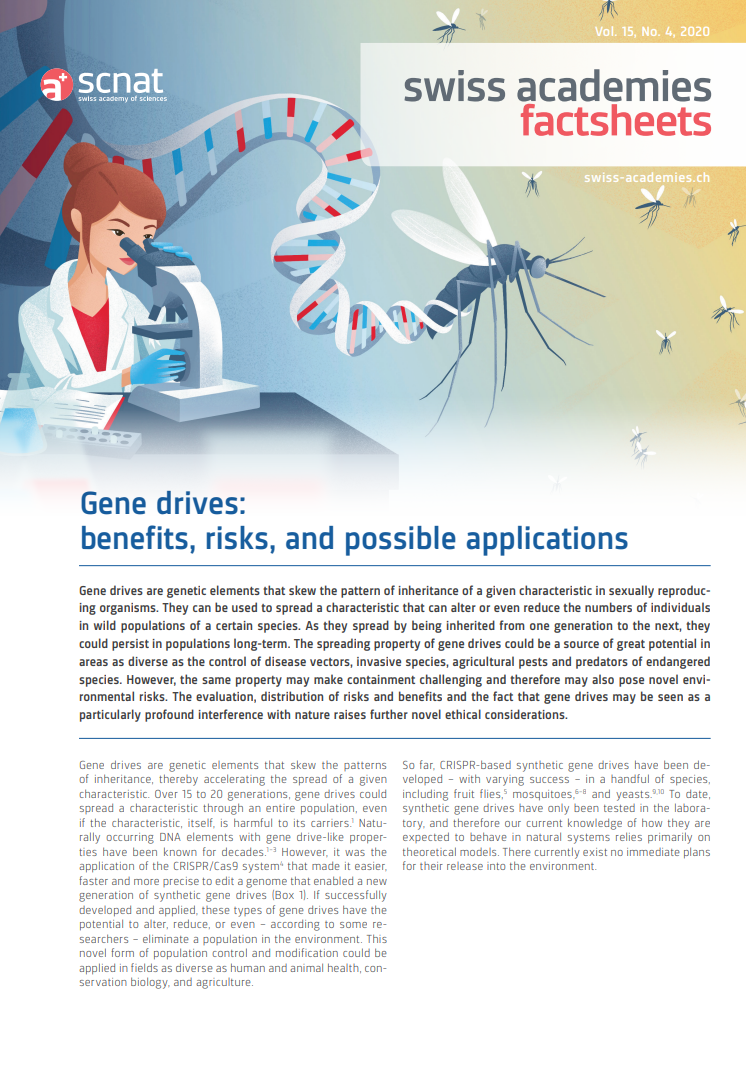
Biotechnology is facing profound transitions due to technological advances that augment the speed, quality and depth of genetic engineering intervention. This ever continued pace of development is posing challenges to the ability of understanding the possible impacts on biodiversity, human and animal health, environment and nature conservation. One example of a rapidly evolving scientific field in this context are genetically modified organisms (GMOs) with synthetic gene drives, also referred to as gene drive organisms (GDOs). Gene drive organisms are designed to spread genetically engineered traits into wild populations. As gene drives have been proposed to control pathogens, pests and invasive species, GDOs gain much attention in the scientific literature, the administration and the public.
The present document provides an overview over the technical realization of gene drives and their proposed applications, including nature conservation. The main focus of the report is on four aspects:
- The environmental implications of GDOs
- The challenges that applications pose for the environmental risk assessment, monitoring and risk management
- Critical uncertainties associated with the approach
- Conceptual and legal challenges of GDO applications in nature conservation.
While gene drive applications might have the potential to address environmental or human health issues, they also bear the potential for significant and irreversible environmental harm.
Published: 01/01/2019
THEMES: Genetics and Genomics
Related Resources