
Gene drive technologies for malaria control in Africa: Who should call the shots?
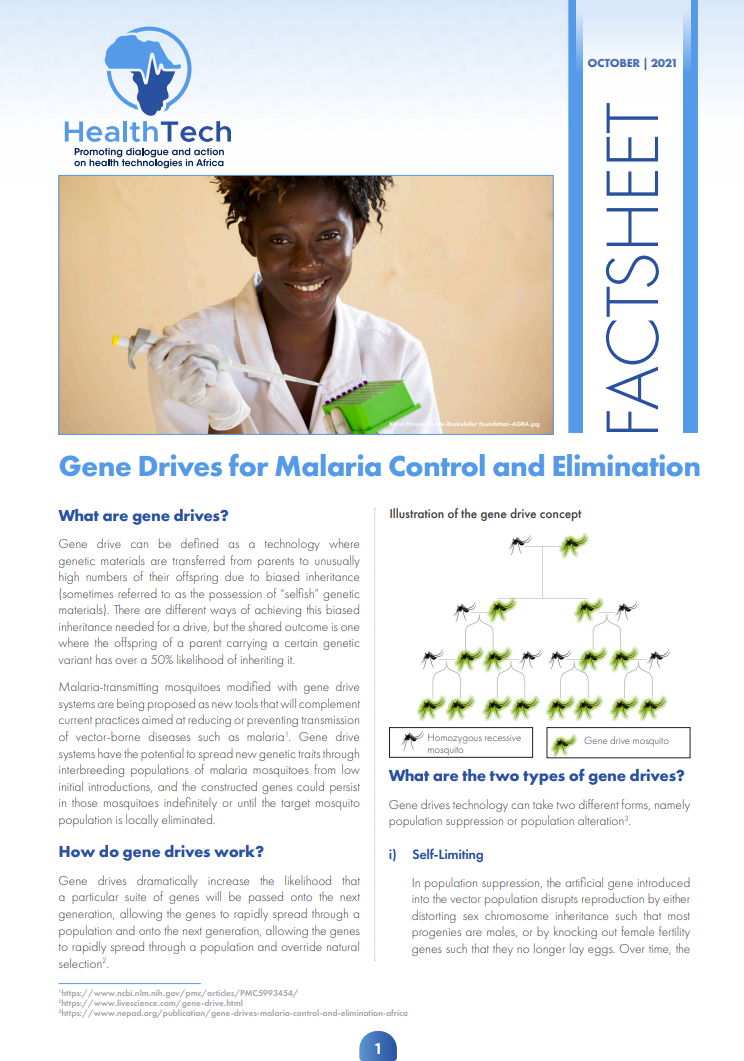
Gene drive technologies have been proposed as a potentially transformative new tool to aid in the control of malaria and other vector-borne diseases. However, given the potential for the genetic modification to persist and spread within the target vector population, there is ongoing discussion about whether existing national regulatory and governance mechanisms provide appropriate and adequate oversight for gene-drive-modified organisms. Some have advocated for broader international governance mechanisms that include a role in decision-making for groups that will not be directly affected by the release of gene drive organisms.
This video, produced by the Rollins School of Public Health at Emory University, engages four international experts (Abha Saxena, Natalie Kofler, Claudia Emerson, Abdallah Daar) in global health ethics, with differing views about the extent of governance requirements, in a structured conversation taking place over several months. Together, they explore use of the Brokered Dialogue method as a model for reasoned and respectful debate about who should be involved in decision-making regarding the potential release of gene drive-modified mosquitoes to control malaria in Africa.
More about the Brokered Dialogue method –https://bmcmedresmethodol.biomedcentral.com/articles/10.1186/1471-2288-12-92
Related Resources