
Last Updated: 27/05/2025
Population genomics and relapse epidemiology of Plasmodium ovale in sub-Saharan Africa
Objectives
The specific aims of this proposal are:
- to characterize the population genomics of Plasmodium ovale in sub-Saharan Africa and
- to describe the epidemiology of P. ovale carriage and relapse in Tanzania.
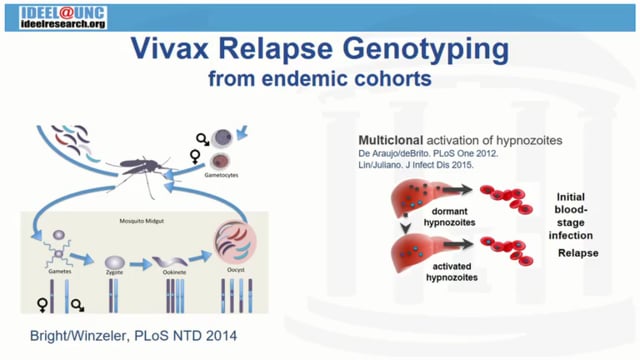
The clinical burden of malaria infections in sub-Saharan Africa has been of tantamount public health importance for decades, but research and control efforts have previously focused on Plasmodium falciparum, the most common and severe of the malaria parasites in the subcontinent. Expanded molecular surveillance has revealed an unappreciated burden of non-falciparum species infections, which in some areas of Africa is increasing. In order to reach malaria elimination, research and control efforts must include a concerted effort to understand non-falciparum species. Plasmodium ovale has been found to be especially prevalent in sub-Saharan Africa, and its ability to cause liver-borne relapse infections lends it special public health significance. However, difficulties in the genetic and clinical study of this parasite have prevented robust examination of its population structure or relapse burden, and the discovery that P. ovale is actually composed of two distinct species further complicates the study of these topics. This proposal leverages the applicant’s unique access to malaria clinical isolates collected across Africa and a prospective cohort of Tanzanian participants who were followed longitudinally for P. ovale recurrence, as well as the trainee’s scientific and didactic background in molecular microbial genomics and infectious disease epidemiology, in order to examine the genomics and relapse behaviors of both species of this poorly characterized malaria parasite. The proposed research and associated training plan will enable the trainee to achieve his specific scientific, clinical, and professional goals. Through the proposed dissertation research, he will cultivate translational research skills in the fields of genomics and epidemiology in order to genetically characterize a population of pathogens and apply the findings to human population health. With his medical training and longitudinal clinical clerkship, he will improve his clinical acumen in the care of infectious diseases for patients from marginalized communities. By continuing to invest in professional and teaching skills, he will develop leadership and educational competency for use in his future career as a physician-scientist in academia.
Aug 2024 — Mar 2028
$41,012
Related Resources